Introduction
By Dave Bostwick
MORE THAN TEXT
An influential 2024 article in the Chronicle of Higher Education asked a crucial question about undergraduate college coursework: Is this the end of reading?
A source in the article suggested that “we’re entering into a hybrid oral-written culture.” Supporting statistics included one estimate that only 20% of college students actually read anything that’s assigned to them outside of class.
One quote in the article provided this advice to college educators: “If you design a class based on the assumption that students will do the readings, you’ll get nowhere.”
The rapid evolution of AI-generated content has further complicated the concept of instructional design. In the audio below, an AI voice conversation agent, Sarah (with a British accent), will read my brief summary of the approach used in this OER text.
Or if you prefer to read, here’s the audio transcript:
It’s still important for students to develop and hone their reading skills, but it’s also critical for them to develop fluency in decoding other media forms, such as audio and video along with emerging interactive and immersive platforms. With that in mind, this OER text incorporates paragraph text along with interactive presentations, audio and video embeds, self-check quizzes, and a variety of digital flip cards. You’ll find that the OER chapters are designed to avoid long blocks of uninterrupted paragraph text.
MEDIA LITERACY AND MEDIA HISTORY
Media content creators and educators share a similar purpose to inform their audiences, and a primary focus of this OER text is to help you make informed decisions that improve your media literacy. Here’s a related flip-card question.
That’s an important distinction, but media literacy extends beyond gaining skills to identify misinformation and disinformation or follow reliable news sources. You also need to understand that many of our current ethical concerns and debates about mass media are not unique.
Or put another way, a crucial component of gaining media literacy is understanding mass media history.
Ultimately, media literacy skills help both consumers and professionals create and publish reliable content, including via social media, in an ethical manner and with an understanding of the long-term effects.
A PERSONAL APPROACH
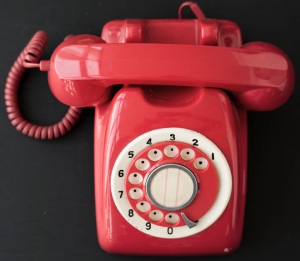 Although we’re in a brave new world of AI content and immediate media gratification, the present can still resemble the past.
When I was a child, I could manually dial a phone number hosted by a local business to hear an automated voice that gave me the current time and temperature along with a brief weather forecast. Many of us have a similar routine today, except we consult our smartphone screens and apps instead of dialing numbers on a rotary phone.
Throughout this text, you’ll have opportunities to share your own reflections about media changes in your lifetime.
ENJOY!
As you learned in the opening comments, some education analysts wonder whether we’ve reached “the end of reading.” Thanks to those of you who did read to the end of this page.
I hope you enjoy this OER project as much as our team enjoyed creating it. Send any feedback or suggestions to Dave Bostwick (bostwick@uark.edu).