
9 Newspapers
By Dave Bostwick
While working for small-town newspapers early in my career, my job was to write sports and news stories, but I often had other duties. When needed, I collected daily stock market prices, edited obituaries and wedding summaries for the society section, maintained a darkroom for printing photos, designed print pages, collected information for ads, and helped load newspapers onto delivery trucks.

Before widespread internet usage, a local daily newspaper was a one-size-fits all publication with something to interest almost everyone in the community, including restaurant coupons, help-wanted ads, movie listings, police and government records (often with weddings and divorces), high-school sports coverage, comics, puzzles and news.
Readers would complain, sometimes for good reasons, about mistakes or biased coverage. However, they kept subscribing to the newspaper because it served as an unofficial record of each day’s events as well as a valued source of information and entertainment. Local newspapers were convenient and mostly credible.
Today, restaurant owners can more easily post coupons on social media, commercial websites offer localized job openings, movie theaters list movies and sell tickets online directly to the public, smartphone apps give us an almost-endless variety of puzzles to solve, and sports teams maintain their own websites that offer statistics and promotional stories.
Perhaps the hardest part of this digital transition has been keeping consumers interested in local news when the other parts of the traditional newspaper no longer have as much value.
YOUR MEDIA LANDSCAPE
In your day-to-day media habits, where do you get local news? Do you think your sources are accurate and reliable?
HISTORY’S FIRST DRAFT
Philip L. Graham, former president and publisher of The Washington Post, is often cited for this famous quotation:
“Journalism is the first rough draft of history.”
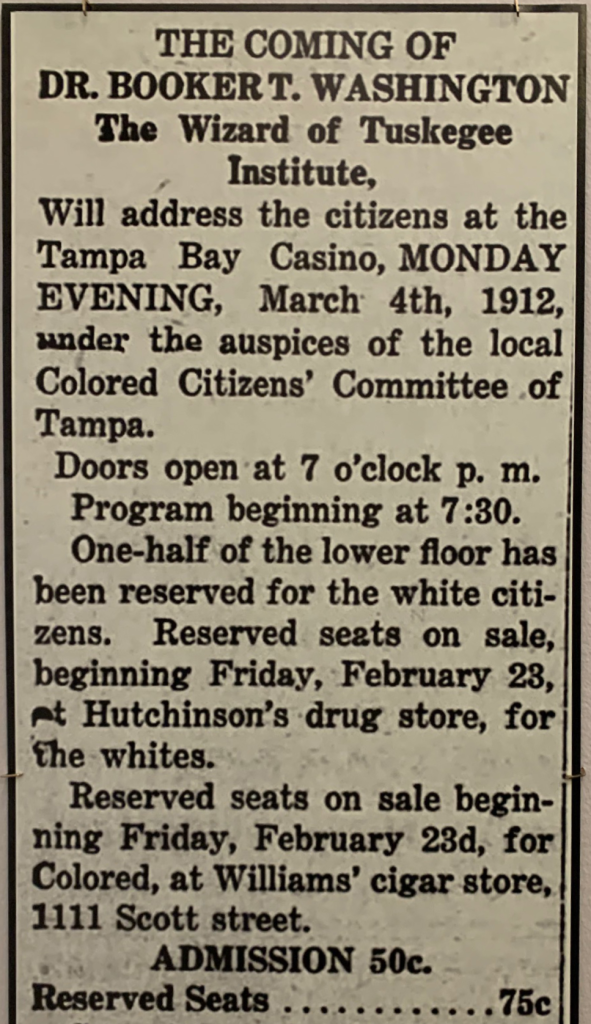
Below is a 1912 newspaper clipping that was on display at the Henry B. Plant Museum in Tampa Bay, Florida. It illustrates the value of newspapers to document history and provide glimpses of societal norms from bygone eras.
NEWSPAPER EVOLUTION
As you read this chapter, consider the effects of technology, especially the internet, on the newspaper industry’s role chronicling local and national history.
The following presentation provides a brief overview of U.S. newspapers.
Study the following presentation slides by using the forward button or clicking on sections of the control bar. To enlarge any interactive presentation in this book, click on the lower-right full-screen option (arrows).
Overcoming the decline of print newspaper subscriptions, four newspaper brands have gained traction nationwide in the transition to digital delivery. Learn more in the presentation below.
Even when the newspaper industry thrived, publishers still had to keep pace with technology improvements on other media platforms. For example, by the 1980s, Americans had become accustomed to color television. At the same time, USA Today gained immediate attention and popularity for its extensive use of color, thus modernizing traditional black-and-white newspaper pages.
A STEADY LOCAL DECLINE
Although the four large national newspaper brands discussed above have survived and sometimes thrived in the past 15 years, most local newspapers are struggling. Hundreds of newspapers have closed.
As one Axios analysis said, “The inequity between giants like The New York Times and The Wall Street Journal and their local counterparts represents a growing problem in America as local communities no longer have the power to set the agenda for the news that most affects them.”
Research from Northwestern University’s Medill School of Journalism showed that “more than half of the nation’s 3,143 counties have little to no local news,” creating what have been called news deserts where a community has no newspaper coverage.
An Associated Press summary of Northwestern’s past research noted that “areas of the country that find themselves without a reliable source of local news tend to be poorer, older and less educated than those covered well.” Furthermore, newspaper employment has decreased 70% since 2006, and newspaper revenues have fallen approximately 60% since 2005.

One newspaper editor, Mary Beth Schneider, summed up the declining newspaper industry like this:
“People who got their news online for free for decades balk at paying for it. And people who still subscribe grumble about cancelling because the paper has shrunk — a direct result of the routine and massive layoffs that have affected newspapers across the nation. Fewer dollars equals fewer reporters equals less news coverage.”
Local newspapers have traditionally functioned as an unofficial fourth estate (or branch) of government, serving as a watchdog over government affairs. However, as Schneider noted, news deserts contribute to lower participation in elections and increased government corruption.
A grave concern in the 2020s is that consumers are no longer interested in local news, even if it’s free. For example, Columbia Journalism Review summarized a research study in which 2,529 people were offered a free subscription their local newspaper, either the Pittsburgh Post-Gazette or the Philadelphia Inquirer. Only 44 people, or less than 2 percent, accepted the free subscription.
A glimmer of good news is that locally focused newspapers that survive are growing their online traffic and digital revenue even as print revenue declines.
And ironically, many collegiate journalism students are reluctant to give up print in their campus newspapers. This is in part because they think the print edition is more distinctive and provides more opportunities for creativity.
ARCHIVING THE FIRST DRAFT OF HISTORY
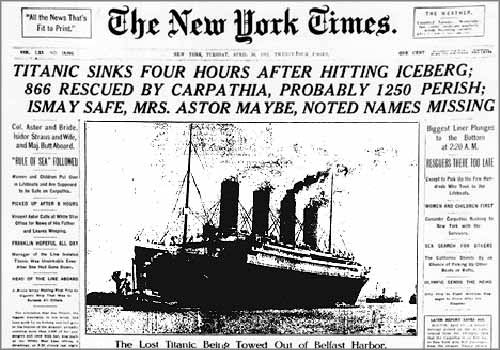
In the previous chapter on books, we studied drawbacks with digital archiving. This is even more true for local newspapers, so let’s re-examine archiving from a newspaper perspective.
To consider advantages of print archiving and concerns with digital archiving, click on the two topic titles in the interactive graphic below.
Related to preserving newspapers as the first rough draft of history, digital curator Giulia Carla Rossi provided valuable perspective for the Guardian:
There is a misconception that when something is on the internet it is there forever. We’ve found that’s definitely not the case and there are so many websites that – for a variety of reasons, including people just not paying for their domain any more, or some kind of update that goes wrong – have completely disappeared.
The demise of the newspaper industry in Arkansas mirrors national trends. The Arkansas Democrat-Gazette and the Northwest Arkansas Democrat-Gazette, under the same ownership, ceased daily print publication. Instead, subscribers could view a replica of a weekday printed newspaper on an iPad provided by the newspaper as part of the subscription fee. In promoting this offering, the newspaper’s publisher said, “They can keep the iPads as long as they continue to subscribe.”
In summer of 2024, the Arkansas Democratic-Gazette went beyond advertising and subscription revenue by starting a public fundraising campaign. The Community Journalism Project was an attempt to raise $100,000 in 100 days.
Journalists have also explored the potential of non-profit journalism. For example, Arkansas Advocate, which launched in 2022, labels itself as an “independent, nonpartisan news organization” that reports on “how state government affects the lives of everyday Arkansans so they can make informed decisions about themselves, their families and their communities.”
Arkansas Advocate, which is supported by grants and donations, is one of many state-focused news sites affiliated with the nonprofit States Newsroom.
ANOTHER ARKANSAS EXAMPLE (AI-generated)
Northwest Arkansas has its own AI-generated news platform, OkayNWA, which launched a website in 2024. Although OkayNWA is not a newspaper, it generates local news and could be considered a competitor for established newspaper outlets.
According to the OkayNWA’s About page, “Unlike traditional news platforms, our content is generated by sophisticated AI algorithms designed to emulate the curiosity and narrative style of human journalists.”
However, an analysis from Harvard’s Neiman Lab noted that “OkayNWA reads closer to a local events aggregator.” This is perhaps because it is easier and less problematic for AI tools to scrape event data rather than craft more complex narratives about social and governmental issues.
Below is a screenshot of the reporter avatars on the site as of February 2025.

Here’s a screenshot of a sample article opening with accompanying AI-generated artwork.

And for readers who want to learn more about the AI reporter, here is Eva Eventful’s bio.

The Nieman Lab article included an admission from OkayNWA designer Jay Price that “at its core OkayNWA is basically a content management system.”
Beyond Arkansas, the reliability of AI-generated news content is a recurring concern. For example, a BBC study found that AI chatbots distort and mislead when asked about current affairs.
THE FUTURE OF NEWSPAPERS
History may repeat itself if the federal government intervenes on behalf of journalism. The Postal Act of 1792 subsidized the delivery of printed newspapers (and the Public Broadcasting Act of 1967 subsidized local broadcast stations).
Will a new form of governmental assistance emerge for today’s local news journalism? This could be a life raft for some rural communities, but critics argue that government-funded journalism would limit investigative stories and potentially allow government officials to determine what does or does not get published.
WHAT IS A NEWSPAPER TODAY?
In 2024, there were more online news sites than print newspapers among the finalists for the Pulitzer Prizes, U.S. journalism’s most prestigious award.
Even though printed newspapers are not as relevant or impactful today (and some publishers only distribute physical copies on Sundays, if at all), they have a prominent place in any study of the evolution of U.S. mass media.
Most consumers still use the word “newspaper” when describing online content from legacy newspaper sites, even though little or no paper is involved in publishing the 21st-century product.
Thus, online “newspaper” journalists may still provide the first draft of history.
FILL IN THE BLANKS
NEWS QUIZ
Wired published a short article suggesting that interactive news quizzes can make us smarter and have evolved into a way to deepen our understanding of current events.
With that in mind, The New York Times offers a weekly quiz that can be helpful to gauge how well you follow the news.
Take the most recent quiz and reflect on your score in two or three tightly-written paragraphs. How would your rate your overall knowledge of current events? What sources help you keep track of current events?
If you are submitting this as part of a course assignment, your instructor may ask you to include a screenshot of your news quiz results.
(https://www.nytimes.com/spotlight/news-quiz)